The Messy Middle
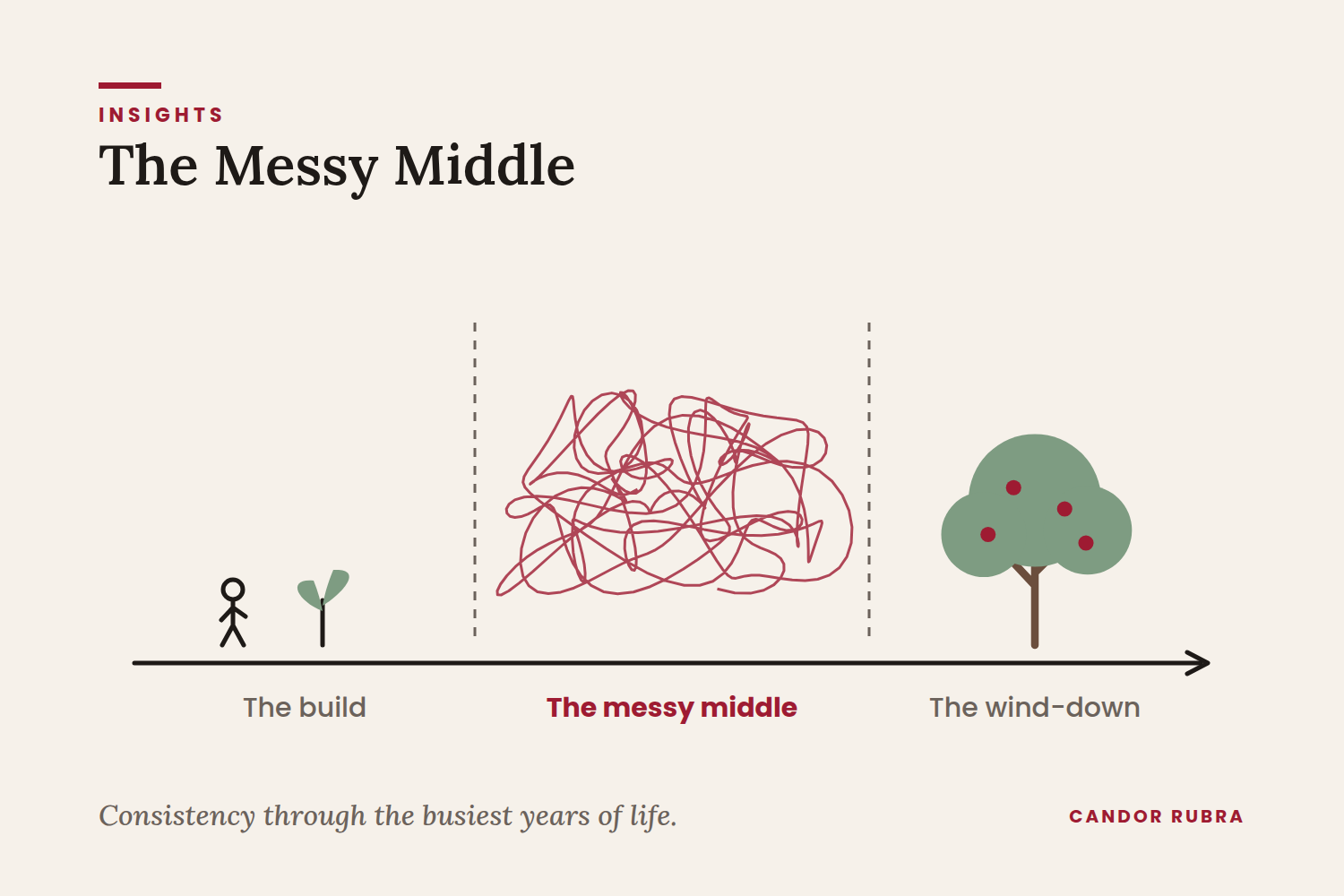
Working life often falls into three broad phases: the early years, when the foundations are put in place; the later years, when thoughts turn to winding down; and the long stretch in between, where most of life actually happens.
By the middle phase, many people already have the basics set up. Accounts are open, regular contributions are running, and an investment approach was agreed some time ago. For many, the job at this stage is less about adding something new and more about giving that structure the time and consistency it was designed around, with regular reviews to check it still fits.
The difficulty is that the temptation to change course often feels strongest during the very years when disruption can have the biggest long-term effect.
Why the middle is so busy
This stage of life is demanding for obvious reasons. Careers are often at their most intense. Children can be at their most expensive, whether that's school, university or the years before they leave home. Parents may start to need more support. Big household costs keep coming round, and even holidays cost more than they used to.
It's also when there's the least spare headspace to think about the future. Money decisions get squeezed into the gaps between everything else, and are often made quickly and under pressure.
Three common ways plans get interrupted
Reducing or pausing contributions. When something has to give, contributions are often the first thing to go, with the intention of catching up later. In practice, a pause can easily become permanent, and the growth those contributions might have had time to build is lost.
Chasing something new. A friend mentions a clever structure, or an investment that has done well recently, and the existing approach can suddenly seem dull. Newer isn't necessarily better, and frequent changes can add cost, complexity and risk without improving the outcome.
Dipping into long-term money. A renovation, a new car or helping a child get started may each be perfectly reasonable. But withdrawing money meant for the long term can have a lasting effect on future plans.
None of these is automatically wrong. Circumstances change, and sometimes a plan genuinely needs to change with them. What matters is making those decisions deliberately rather than by default.
Questions worth asking
A few questions can help when the pressure builds:
If money is tight, where do my long-term contributions sit in my list of priorities?
If a new idea comes up, is it genuinely better for my situation, or simply newer and more interesting?
If something would mean drawing on long-term savings, what might that mean for my future plans?
Making changes deliberately
For people in this busy middle stretch who already have a plan, consistency is often one of the most valuable things they can bring to it. If something has come up that's making you think about changing course, it can help to talk it through with a professional adviser first, so the decision reflects your full circumstances.
Important information
This article is for information purposes only and does not constitute financial advice, which should be based on your individual circumstances. The information provided is subject to the UK regulatory regime and is therefore primarily targeted at consumers based in the UK.
The value of investments and any income from them can fall as well as rise. You may not get back the full amount invested.
Read More Articles