Investing When Markets Are at Record Highs
When markets are hitting record highs, a familiar question comes up: is now a bad time to invest?
It's an understandable worry. If prices have already climbed a long way, it can feel as though there's more room to fall than to rise, and some people decide to hold back until the market dips.
This article looks at why record highs happen more often than you might think, what waiting can involve, and some of the ways people approach investing new money. It isn't a view on where markets are heading next. Nobody can reliably know that.
Records are more common than they sound
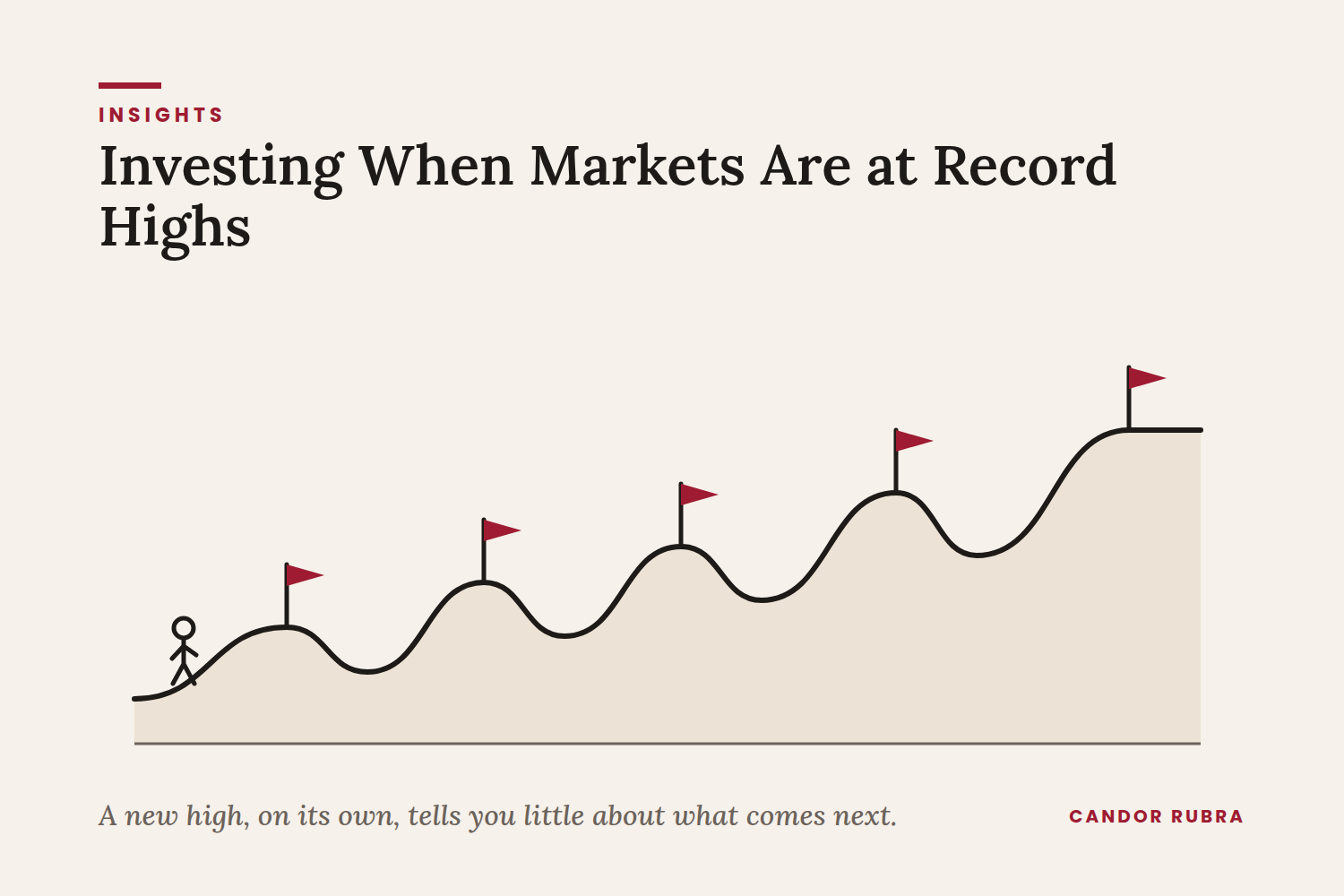
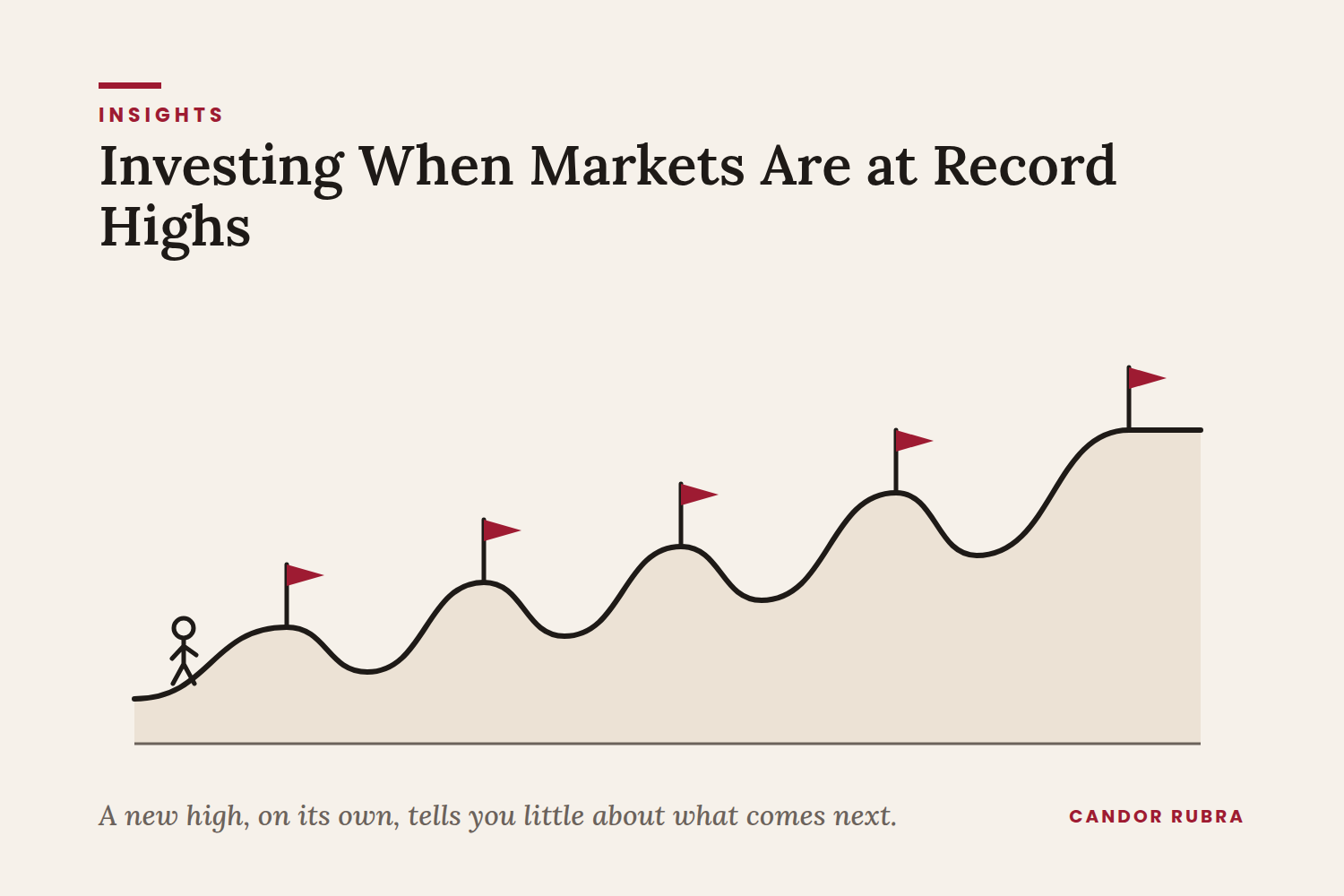
In sport, a record is celebrated because it's rare. In investment markets that have tended to grow over long periods, new highs have historically been a fairly regular occurrence. If the general direction over time has been upward, markets will often pass their previous peak along the way.
That doesn't make a new high a signal of further gains. Falls can begin at any point, and most arrive without warning. A record on its own simply tells you very little about what happens next, in either direction.
The trade-offs of waiting
Holding back for a better moment can feel like the careful choice, and for some people the reassurance is worth something. But it comes with trade-offs worth understanding:
The fall you're waiting for may not come for some time, and when it does, it could start from a higher level than today.
Money held back in cash isn't exposed to market falls, but it doesn't take part in any growth either, and inflation can reduce its real value.
Falls usually arrive alongside bad news. In the moment, what looked like an opportunity on paper can feel far less comfortable, and it's common to then wonder whether to wait for further falls.
Equally, investing at any point, whether markets are at a high or not, means accepting that the value could fall shortly afterwards. No approach removes that risk.
Focusing on what you can control
Nobody controls the timing of the market. What you can influence is matching money to its purpose. Money you may need in the near future generally belongs somewhere different from money you won't need for many years, and getting that balance right tends to matter more than the date you invest.
When it comes to a larger sum, people typically weigh up two broad approaches:
Investing all at once. The money is invested for longer, but the whole amount is exposed straight away to any short-term fall.
Phasing it in. The money is split into amounts invested on set dates over a period of months. This can reduce the impact of unlucky timing and may feel more comfortable, but money waiting to be invested may miss out if markets rise in the meantime.
Neither is right for everyone. Which suits a person depends on their goals, time horizon, attitude to risk, capacity for loss, and how they would feel if markets moved sharply either way soon afterwards. Where phasing is used, people often find it helps to fix the schedule in advance rather than deciding on the day based on how markets feel.
Feeling uneasy is normal
Hesitating when markets are at a high is a completely natural reaction. If it's on your mind, professional advice can help assess what's appropriate for your own circumstances and how any decision fits within your wider plans.
Important information
This article is for information purposes only and does not constitute financial advice, which should be based on your individual circumstances. The information provided is subject to the UK regulatory regime and is therefore primarily targeted at consumers based in the UK.
The value of investments and any income from them can fall as well as rise. You may not get back the full amount invested.
Investing in shares should be regarded as a long-term investment and should fit in with your overall attitude to risk and financial circumstances.
Past performance is used as a guide only; it is no guarantee of future performance.