How to Think About a Pay Increase
A pay rise is often a sign that your work is valued. It can also be a moment that shapes your finances for years to come, depending on what happens to the extra money.
This piece shares some ways of thinking about a pay increase. It isn't a set of rules, just a few ideas that may be useful the next time one comes along.
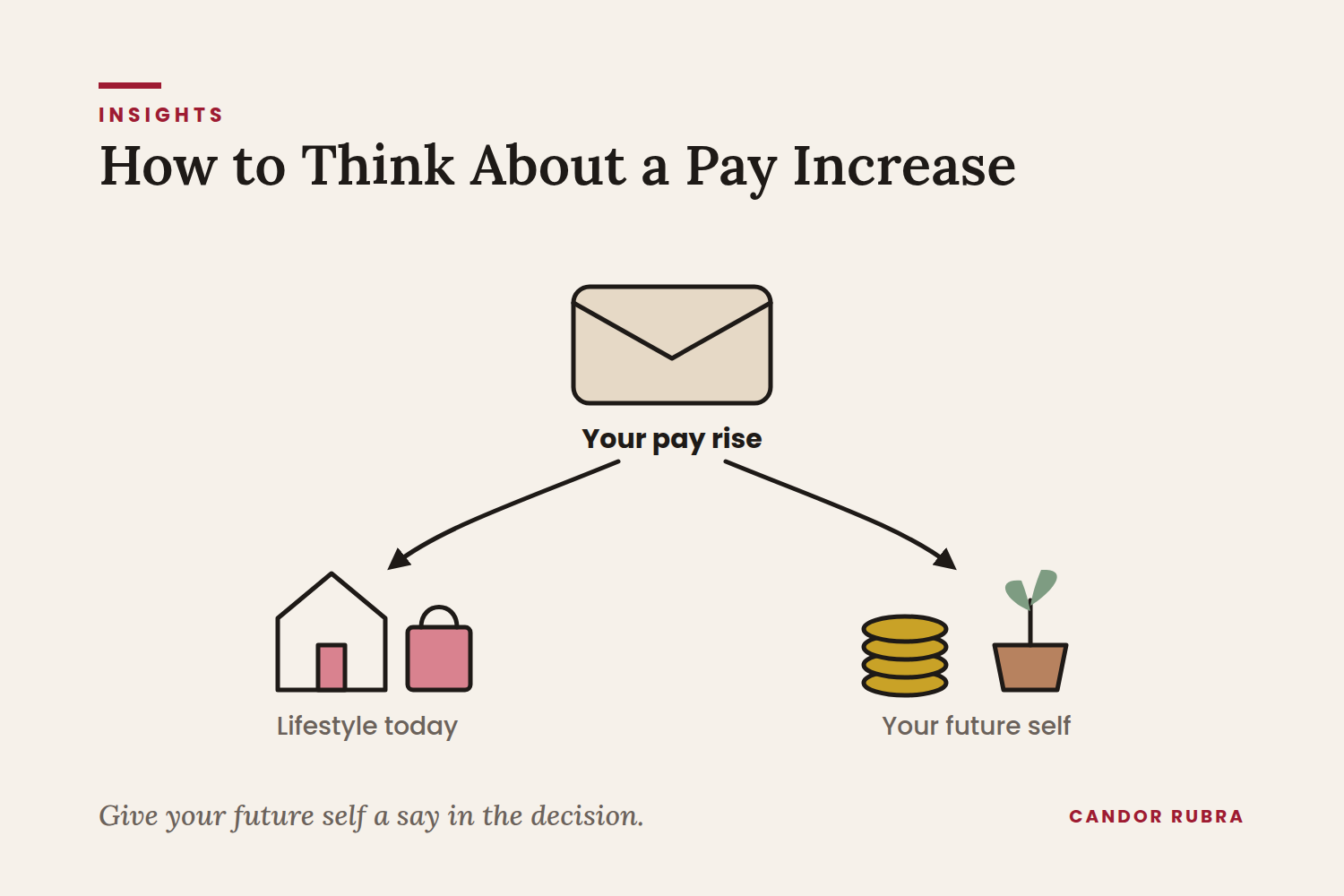
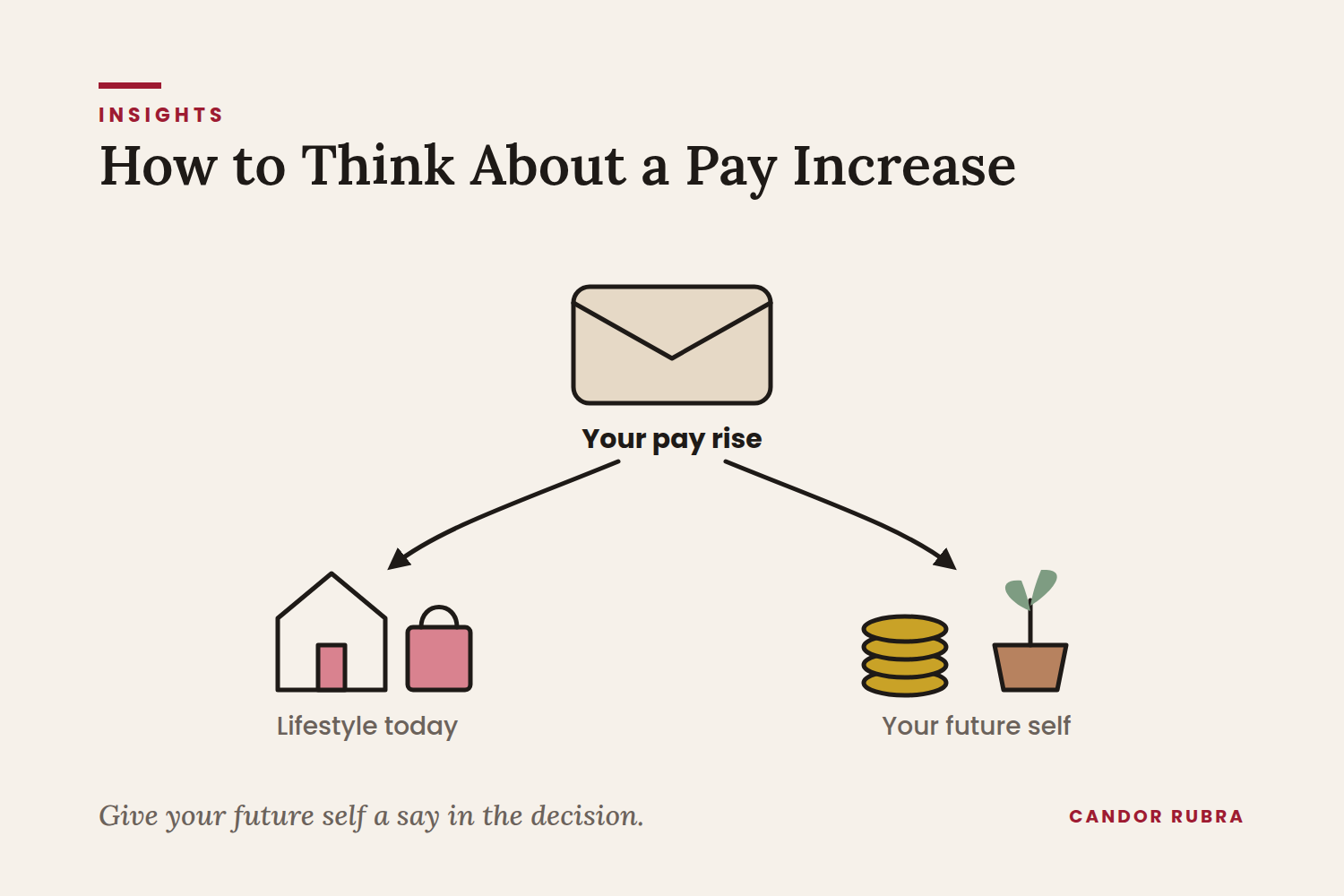
Where does the pay rise go?
It's common for people to earn considerably more than they did a decade ago and yet feel no further ahead. Usually there's no single big mistake. Each increase was simply absorbed into day-to-day life.
That's entirely understandable. Most of us naturally give more weight to the present than to the future. A larger home, a more practical car, family holidays while the children still want to come along: each is a reasonable choice, and each is easy to say yes to when the money first arrives.
Within a few months, the new level of spending tends to feel normal. Going back can feel like a loss, even though it would only mean returning to a lifestyle you were once perfectly happy with.
Why higher spending can cost twice
A permanent rise in spending affects your finances in two ways.
The first is obvious: money that's spent isn't saved or invested, so less builds up over time.
The second is talked about less. The amount of savings and investments someone may need to one day stop working is driven largely by what they spend, not by what they earn. If spending rises permanently, that target generally rises too.
While a salary is coming in, a regular commitment can feel small. Once the same commitment has to be met from money built up in the past, it can feel very different.
By contrast, directing part of each increase towards the future means more is set aside while the target rises more slowly. Small differences in habit, repeated over many years, can lead to quite different positions.
Deciding before the money arrives
Some people find it helpful to decide in advance what proportion of any future pay rise they'll direct towards longer-term goals. Making that decision while the increase is still hypothetical means you're not giving up something you already have. Once the money is in your account, the same choice often feels much harder.
There's no single 'correct' proportion, and saving more isn't always the first priority. Clearing expensive debt, building a cash buffer for emergencies, or simply enjoying the rewards of your work can all be valid choices.
This isn't an argument against enjoying a better life. Your income rose so your life could improve, and it should. It's simply a prompt to give your future self a say in the decision too.
A question worth considering
If you haven't thought about how you'd handle your next pay rise, it may be worth considering before it arrives. How it fits with your own circumstances is something professional advice can help with.
Important information
This article is for information purposes only and does not constitute financial advice, which should be based on your individual circumstances. The information provided is subject to the UK regulatory regime and is therefore primarily targeted at consumers based in the UK.
The value of investments and any income from them can fall as well as rise. You may not get back the full amount invested.